Watercolor Poinsettia Flowers Clipart: A Designer’s Review for Brand & Marketing Visuals
First Impressions: A Festive, Handmade Aesthetic with Versatile Appeal
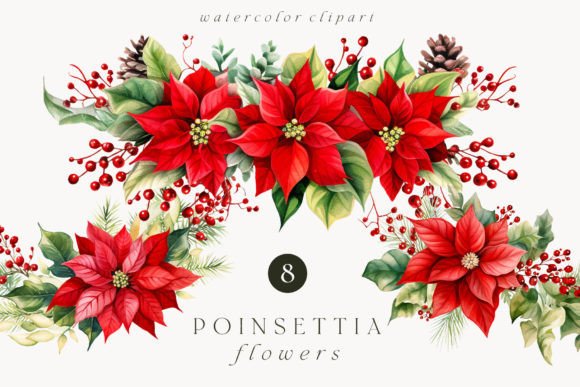
Opening up the Watercolor Poinsettia Flowers Clipart set, I was immediately struck by the soft, painterly textures and warm holiday tones. These illustrations feel like they were created with intention—perfect for seasonal branding, greeting cards, or boutique packaging. The brushstrokes are organic, not overly tight, giving the designs a natural, artisanal vibe that’s especially appealing for small businesses and handmade brands.
From a design standpoint, these poinsettia graphics carry a strong emotional tone—nostalgic yet modern, festive but not kitschy. That’s a rare balance, especially in holiday-themed clipart. If your client is launching a December product line, seasonal campaign, or Etsy shop with a cozy aesthetic, this design asset could be the visual glue that ties everything together.
Real-World Application: From Packaging to Social Media
I tested the Watercolor Poinsettia Flowers Clipart across a variety of design formats, including product labels, Instagram story templates, and Canva-based social media posts. In each case, the illustrations added warmth without overpowering the layout. On a minimalist candle label, the poinsettia graphic felt elegant and refined. On a festive holiday flyer, it added a classic, celebratory touch.
- Logo design: Not ideal as a primary logo, but works beautifully as a supporting graphic in logo suites or brand kits.
- Brand identity: Excellent for seasonal brand extensions—think December newsletters, holiday packaging, or limited-edition product lines.
- Printable designs: Perfect for downloadable planners, greeting cards, or wall art, especially in the late fall and winter months.
- Cricut projects: Clean edges and transparent backgrounds make these graphics easy to cut and layer for DIY crafts or custom merchandise.
- Social media graphics: Use as a background accent or central visual in Pinterest pins and Instagram posts to boost seasonal engagement.
Where This Clipart Shines
The Watercolor Poinsettia Flowers Clipart performs best in projects that benefit from a warm, organic aesthetic. Here are the top use cases where it truly elevates the design:
- Seasonal packaging design: Adds a festive, boutique feel to food packaging, gift boxes, and product wraps.
- Hero graphics on websites: As a background element for holiday landing pages or seasonal promotions.
- Editorial design: Enhances the visual mood in newsletters, blog headers, or print magazines with a cozy, handcrafted look.
- Merchandise design: Works well on mugs, tote bags, and t-shirts when paired with clean typography and contrasting colors.
- Commercial design assets: Great for inclusion in Canva templates, design bundles, or digital product kits aimed at small business owners and crafters.
Where to Use It with Caution
While the Watercolor Poinsettia Flowers Clipart has a lot going for it, there are design contexts where it may not perform as well:
- Small print sizes: Details in the watercolor texture can get lost in business cards or small stickers.
- Minimalist branding: Too much visual texture can clash with ultra-clean, modern design systems.
- Busy layouts: May compete with other elements in multi-layered compositions or complex editorial spreads.
- Corporate materials: Not ideal for formal proposals, investor decks, or professional reports where visual restraint is key.
- Low-contrast backgrounds: The soft tones can fade into light or pastel backgrounds, reducing visual impact.
Design Performance: Readability, Hierarchy, and Brand Consistency
When integrating these illustrations into client projects, I paid close attention to how they interacted with typography and color schemes. The watercolor style works best when contrasted with bold sans-serif fonts or clean script typography. Using them with a heavy serif or overly ornate font can make the layout feel cluttered or outdated.
In terms of hierarchy, the clipart functions best as a supporting or background element rather than a focal point. It enhances the visual mood without pulling focus away from headlines or calls to action. For brand consistency, it’s important to use these graphics in a way that aligns with the brand’s seasonal identity—ideally in holiday-themed campaigns or limited-time product launches.
Practical Designer Notes Before Use
Before locking in this design asset for a client project, here are a few key checks every designer should perform:
- Test in black and white: See how the illustration translates to monochrome, especially if it will be used in print or grayscale contexts.
- Check contrast: Preview on both light and dark backgrounds to ensure visibility and readability.
- Preview at multiple sizes: Make sure the details hold up in both large and small formats.
- Place on real mockups: Use product mockups to see how it looks in context, especially for packaging and merchandise design.
- Test print quality: Confirm resolution and color accuracy if using for physical print projects.
- Review file formats: Ensure you have access to both PNG and SVG files for flexibility in editing and scaling.
- Inspect transparency: Check if PNG files have clean, crisp transparent edges for seamless layering.
- Confirm commercial licensing: Always verify that the clipart is cleared for commercial use, especially if it will be part of a print-on-demand or Etsy product.
Final Thoughts: A Festive, Flexible Design Asset
Overall, the Watercolor Poinsettia Flowers Clipart is a well-crafted, emotionally resonant design asset that brings a handmade, seasonal warmth to a wide range of visual projects. Whether you're designing for a local boutique, creating digital templates for Canva users, or building a holiday campaign for social media, this clipart can elevate your visuals with minimal effort.
For designers, brand owners, and digital sellers, it’s a valuable addition to your creative toolkit—especially during the late fall and winter months. Just be mindful of how and where you apply it, and always test it thoroughly before final delivery to the client.